What are Coping Strategies?
Coping strategies are cognitive and behavioral efforts used to manage stressors. They help individuals respond to difficult situations by regulating emotions, reframing experiences, or taking action to reduce the stressor itself.
Problem Focused
Taking action to address the stressor directly through planning, problem-solving, information-seeking, or practical change.
Emotion Focused
Managing emotional responses through reflection, mindfulness, acceptance, calming strategies, or emotional processing.
Meaning Focused
Finding purpose, values, spirituality, or personal meaning as a way of navigating stress and hardship.
Social Support
Seeking support from family, friends, community, peers, or trusted social networks during times of stress.
Effective coping is not one size fits all
A coping strategy does not work the same way everywhere. The same approach can be effective in one context and entirely out of reach in another.. not because of the person, but because of what their world makes possible.
Problem-focused Environments
Best supported where people have practical resources, institutional trust, and access to services that help them act directly on a problem.
Emotion-focused Environments
Best supported where emotional reflection, mindfulness, and mental health conversations are culturally accepted and encouraged.
Meaning-focused Environments
Best supported where values, spirituality, and purpose are recognized as legitimate frameworks for making sense of hardship.
Social Coping Environments
Best supported where family, community, and interpersonal bonds are strong parts of daily life and seeking help from others carries no shame.
Explore the Global Coping Map
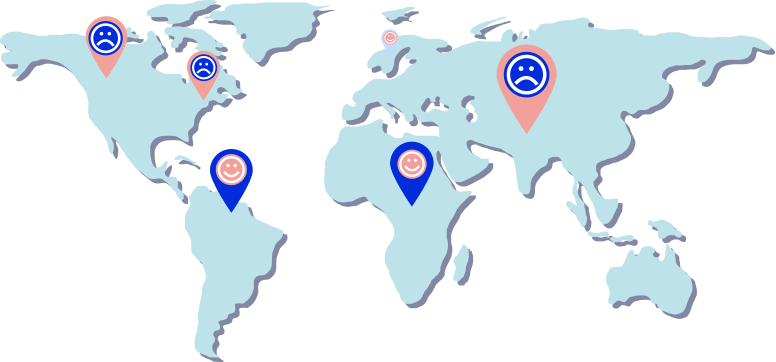
This interactive map compares countries by the coping-support profile most strongly suggested by their broader cultural, social, wellbeing, and mental health system environment.
Click on a country to view its dominant coping-support profile, regional context, and confidence level.

Coping Across Cultures